
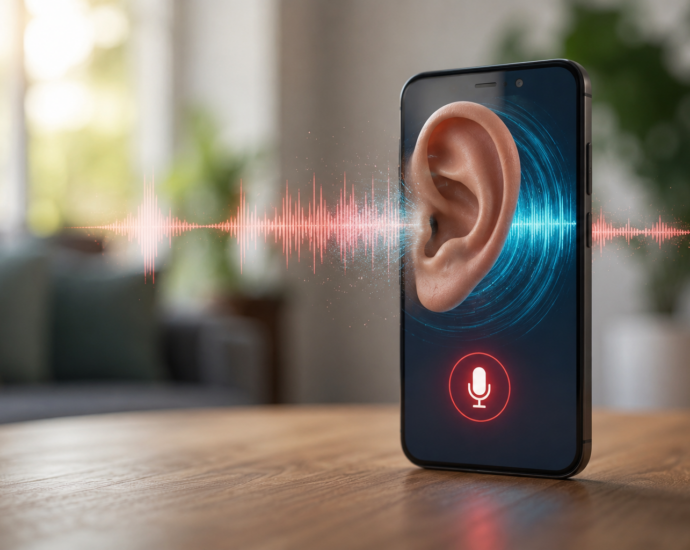
Sometimes there is too much coincidence for it to be a coincidence. You mention a certain coffee brand in a conversation, and a few hours later you see an advertisement for it.
Someone tells you about a great summer destination, and suddenly your social media feeds are full of travel offers for that exact location. It is no surprise that many people believe their phones are secretly listening to them.
However, when cybersecurity experts analyzed more than 17,000 Android applications to determine whether they activated microphones without permission, they found no evidence of secret recording of conversations.
There is also a practical issue: continuously transmitting audio would require around 130 megabytes of data per user every day. On a global scale, such data usage and battery consumption would be easily noticeable.
Apple, Google, and Meta state that they do not use microphone data for targeted advertising. Even in a lawsuit involving the accidental activation of Siri, court documents showed that audio recordings were not used to create marketing profiles or sold to third parties.
The truth is, in some ways, even more unsettling: algorithms have become so good at predicting human behavior that eavesdropping is often unnecessary.
Modern advertising systems rely on enormous amounts of data, including location, search history, purchases, app usage, and social media activity.
For example, if you spend part of your day with someone who recently researched a specific travel destination, systems may detect that your devices were in the same place. Based on this information, they conclude that there is a connection between you and begin showing you similar content and advertisements.
Because of this, it often feels as though your phone is “listening” to your conversations, when in reality these are conclusions drawn from existing data.
Psychologists associate this effect with a phenomenon known as the frequency illusion, or the Baader-Meinhof phenomenon. Every day we pass by hundreds of advertisements without noticing them.
However, once we talk about or think about a product, it becomes the focus of our attention. When an advertisement for that product appears shortly afterward, it seems like an incredible coincidence, even though it may have been there all along.
Companies that trade in data possess enormous amounts of information collected through app usage, permissions granted by users, online activity tracking, and various analytics tools.
Security researchers have even discovered applications that secretly take screenshots of users’ devices in the background, which is a direct violation of privacy and does not require any audio recording at all.
The conclusion is that technology companies often do not need to listen to what you say — what you do on your devices is already enough for them.