
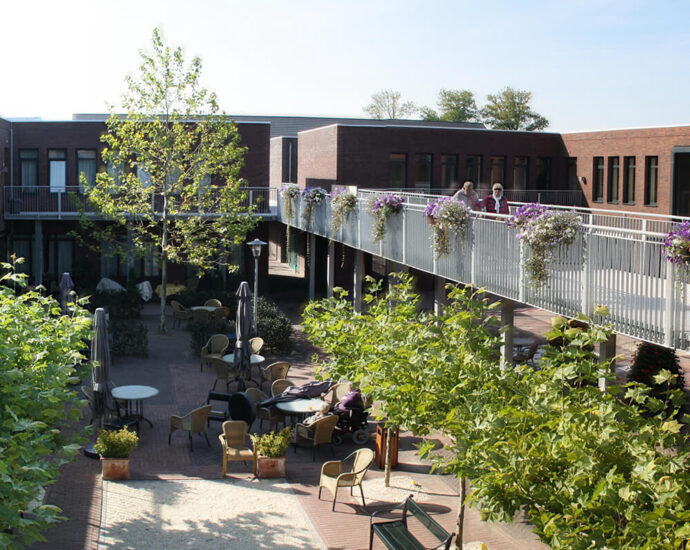
People who appear completely ordinary live in an ordinary-looking village, go shopping, visit cafés, and take walks through parks. Yet every step they take is monitored by cameras, while almost everyone around them is part of a carefully designed system. The surprising reality is that the entire environment has been created for a very specific purpose.
Just twenty kilometers from Amsterdam lies Hogewey, a unique Dutch village. At first glance, it looks like any other community, with neat houses, shops, cafés, and well-maintained gardens. Residents buy groceries, watch movies, and socialize with neighbors. However, much of this seemingly normal world is actually part of a specialized care concept.
Hogewey is not a traditional neighborhood but a residential care village for people with severe dementia and Alzheimer’s disease. Its creators rejected the idea of conventional nursing homes filled with hospital corridors, locked doors, and institutional surroundings.
Instead, residents are given the opportunity to live in a setting that resembles ordinary life. The village includes houses, a theater, a post office, shops, and social clubs. Behind the scenes, many of the shop assistants, waiters, gardeners, and other staff members are trained caregivers.
The project was created by nurse Yvonne van Amerongen, who spent years working in traditional nursing homes. Witnessing the struggles of dementia patients inspired her to create a more humane environment where people could maintain dignity, independence, and a sense of normal life.
After years of planning and fundraising, the village opened in 2009. Nearly thirty two-story houses were built across seven hectares of land. Each home accommodates six or seven residents, grouped according to similar lifestyles, interests, and personal backgrounds.
Residents decide for themselves when to eat breakfast or lunch. Some visit the local café, while others choose to dine at home. Each month, they receive symbolic money that can be used in the village’s shops and restaurants. The goal is not financial control but preserving a sense of autonomy and everyday routine.
Research has shown that residents of Hogewey often eat better, laugh more frequently, and experience a higher quality of life. The philosophy behind the village is simple: a calm, familiar, and supportive environment can significantly improve well-being.
Admission is limited to people with advanced dementia or Alzheimer’s disease. As a result, places rarely become available, and the village has operated at full capacity since opening.
Construction costs reached approximately 25 million dollars, while the monthly care cost per resident is close to 8,000 dollars. Government subsidies help reduce expenses for families.
Supporters of the concept argue that traditional institutions can sometimes increase feelings of loneliness and isolation. Hogewey offers a different approach by focusing on community, freedom, and meaningful daily activities.
While it is not a cure for dementia, the village has become an internationally recognized example of how innovative care can transform the lives of people living with memory disorders.