
A university degree, a stable office job, and a pension at the end of a long career have long been considered the standard path to success.
For generations, this model shaped education systems, labor markets, and personal expectations. However, a growing number of researchers believe that children born after 2025 may experience a radically different future.
This new demographic group, known as Generation Beta, includes children born between 2025 and 2039.
If Generation Z grew up with the internet and Generation Alpha with smartphones and tablets, Generation Beta will be the first generation to spend its entire life in a world deeply integrated with artificial intelligence.
According to experts in education, neuroscience, and technology, one of the biggest mistakes parents can make today is preparing children for a system that is already beginning to disappear.
For decades, success followed a relatively predictable path: attend school, earn a degree, find stable employment, and remain in the same profession for most of your adult life. But rapid technological change is challenging this model.
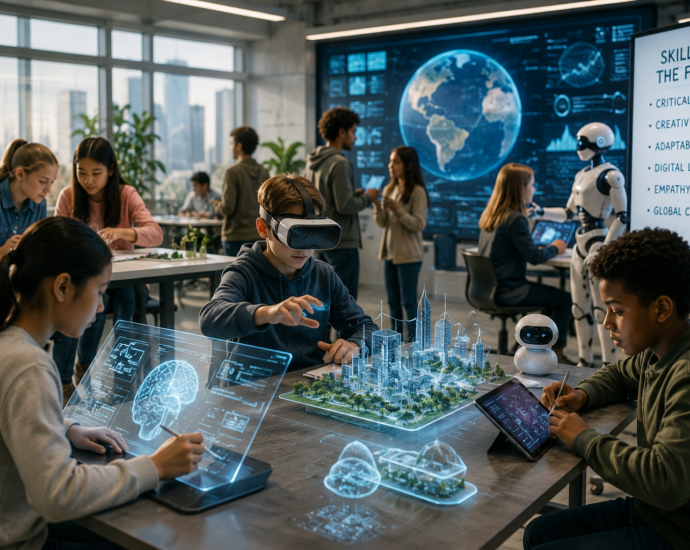
Researchers increasingly argue that future success will depend less on memorizing information and more on critical thinking, creativity, emotional intelligence, adaptability, and the ability to ask meaningful questions.
Artificial intelligence is expected to transform almost every industry. Future workers may collaborate daily with AI systems capable of analyzing information, creating content, writing software, diagnosing diseases, and performing many tasks currently done by humans.
Because of this, many experts believe traditional educational models will need major reforms. Basic subjects such as mathematics, reading, and science will remain important, but schools may place greater emphasis on problem-solving, communication, teamwork, digital literacy, and lifelong learning.
Studies from institutions such as MIT and Stanford suggest that future workers will need to continuously update their skills throughout their lives rather than relying on knowledge acquired during their early years of education.
The workplace itself is also changing.
Traditional offices are already becoming less central to many professions. Remote work, digital collaboration platforms, and global project-based teams are transforming how companies operate.
Instead of spending decades in a single profession, Generation Beta may move through multiple careers during their lifetime. Many people could combine several sources of income simultaneously, working on projects rather than holding one permanent position.
Consulting firm McKinsey has estimated that automation and artificial intelligence could significantly transform a large share of existing occupations over the coming decades. Some jobs may disappear entirely, while others will evolve beyond recognition.
As a result, experts increasingly argue that future education may rely less on lengthy degrees and more on flexible learning models, including specialized certifications, online programs, practical projects, and continuous professional development.
The concept of retirement may also change dramatically.
Modern pension systems were designed during a period when people typically worked for around 40 years and spent a relatively short period in retirement. Today, advances in medicine and healthcare are steadily increasing life expectancy.
Some futurists believe that many children born today could live well into their 90s or even beyond 100 years of age.
Such demographic changes could place enormous pressure on pension systems worldwide. Rather than a single transition from work to retirement, future generations may experience multiple career shifts, extended learning periods, temporary breaks from work, and flexible forms of semi-retirement.
This does not mean schools, universities, offices, or pensions will disappear completely. However, many experts agree that society is likely to change faster during the next 30 years than it did during much of the previous century.
For Generation Beta, curiosity, adaptability, resilience, and a willingness to learn continuously may become more valuable than any single diploma or job title.