
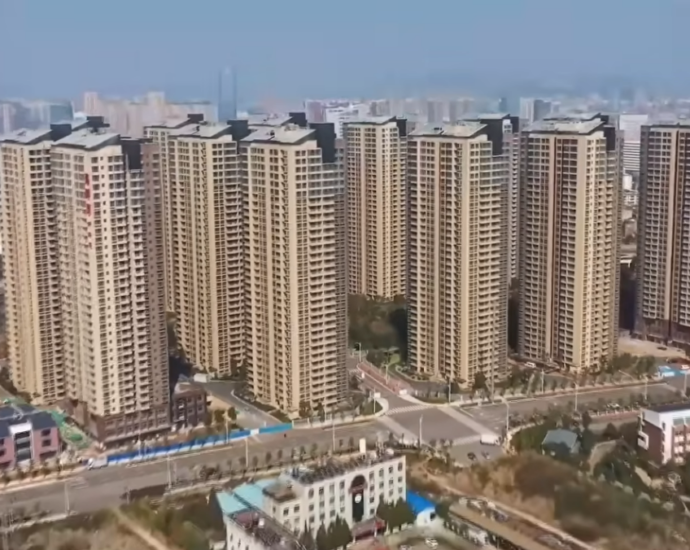
While many countries struggle with housing shortages and soaring property prices, China has faced a very different challenge: entire cities with few people living in them.
Over the past two decades, China has undergone one of the fastest urbanization programs in human history. Massive residential districts, skyscrapers, shopping centers, highways, and public infrastructure appeared across the country at an astonishing pace.
Some of these developments were so large that they were designed to accommodate hundreds of thousands, or even millions, of future residents.
However, not all of them filled up as expected.
As a result, the world became fascinated by what are commonly known as China’s “ghost cities” — modern urban areas filled with apartment towers, wide boulevards, and commercial centers, but with surprisingly few inhabitants.
The phenomenon emerged from a simple strategy: build first and attract residents later.
Chinese authorities and developers believed that rapid construction would support future population growth and economic expansion. In many cases, however, housing developments appeared long before jobs, businesses, schools, transportation links, and local services could attract permanent residents.
Another important factor was investment.
For years, real estate became one of the most popular forms of investment in China. Many buyers purchased apartments not to live in them, but as financial assets, often owning multiple properties that remained vacant.
This created neighborhoods where thousands of apartments were technically sold, yet very few people actually lived there.
Estimating the exact number of ghost cities remains difficult because detailed occupancy data is not always publicly available. However, researchers have estimated that a significant percentage of newly built housing units remained unoccupied for extended periods.
Despite their reputation, many of these cities are not completely abandoned.
Several previously empty districts have gradually attracted residents as transportation networks improved, businesses expanded, and population growth continued.
Chinese planners have long argued that many of these developments were designed with future migration in mind. Over the coming decades, hundreds of millions of people are expected to move into urban areas across China.
Whether all of these ambitious projects will eventually reach their intended population levels remains uncertain. Yet China’s ghost cities remain one of the most fascinating examples of large-scale urban planning ever attempted.