
The Day of the Slavic Enlighteners, Saints Cyril and Methodius, celebrated on May 24, is one of the most important dates in the cultural and educational history of Slavic peoples.
Their work during the 9th century laid the foundations of Slavic literacy, education and literature, leaving a legacy that continues to play a crucial role in preserving national identity and linguistic traditions.
The Thessaloniki brothers, Constantine the Philosopher – Cyril and Methodius, created the Glagolitic alphabet, the first Slavic script, and translated key religious texts into a language understandable to Slavic communities. Their efforts enabled the spread of literacy and affirmed the importance of the mother tongue in education and spiritual life.
Their mission was later continued by disciples including Saint Clement of Ohrid and Saint Naum of Ohrid, whose educational legacy remains closely linked to the region and the development of Slavic literary traditions.
Although the holiday is commemorated every year through ceremonies, cultural events and educational programs, questions remain about how much attention society truly dedicates to language, literacy and culture.
At a time when digital communication dominates everyday life and young people spend increasing amounts of time on social media, maintaining interest in literature, books and cultural heritage has become a significant challenge.
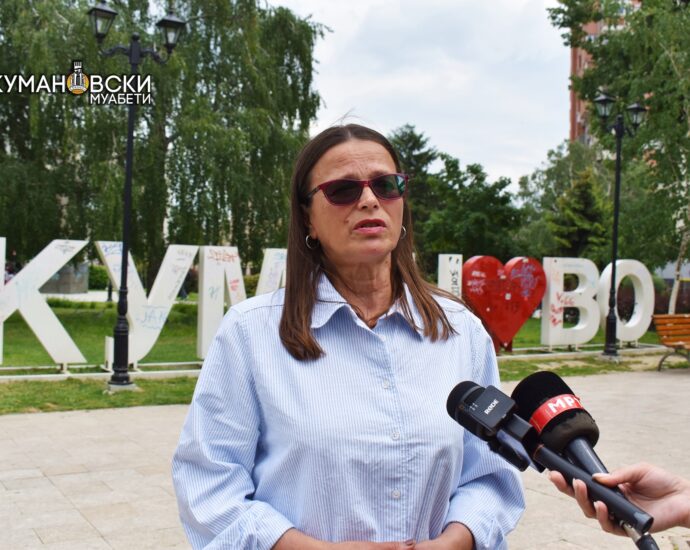
Macedonian language and literature teacher Angela Petkovska believes there has been greater interest in marking such important dates in recent years.
“I can freely say that last year, or perhaps two years ago, we began paying more attention to these important dates. Before that, there was a long period of silence and lack of interest in events that should be meaningful to us every day,” Petkovska said.
According to her, numerous activities dedicated to the legacy of Cyril and Methodius have recently been organized, including competitions and cultural programs involving students from different schools.
“The response was quite strong, especially from primary schools. Participation from secondary schools was more limited, which again shows that young people are not particularly interested,” she noted.
Petkovska believes interest in cultural content and contemporary Macedonian literature remains below expectations, as reflected in limited public awareness of domestic authors.
She cited the example of writer Olivera Qorveziroska, recently awarded Novel of the Year for her book Tri Marii.
“When I mentioned to friends and colleagues that Olivera Qorveziroska would be our guest speaker, many simply looked at me without recognizing the name. She recently received the Novel of the Year award and is one of Macedonia’s most prominent contemporary authors, as well as a fellow citizen of Kumanovo. Yet many people do not know who she is. That says a great deal about how familiar we are with our cultural values and how much we respect them,” she added.
Despite the challenges, Petkovska expressed hope that current initiatives will continue and evolve into lasting traditions that encourage greater care for language, literature and cultural heritage.
The observance of Saints Cyril and Methodius Day is not only a reminder of the historical significance of their mission but also an opportunity to encourage broader public discussion about attitudes toward the mother tongue, literacy and culture.
The legacy of the Slavic enlighteners is preserved not only through formal celebrations and commemorative speeches, but also through everyday efforts to use language correctly, read books, support local authors and respect the cultural values that shape society.